Diamonds Held in Trust: The Federal Fate of America's Confiscated Dynastic Jewels
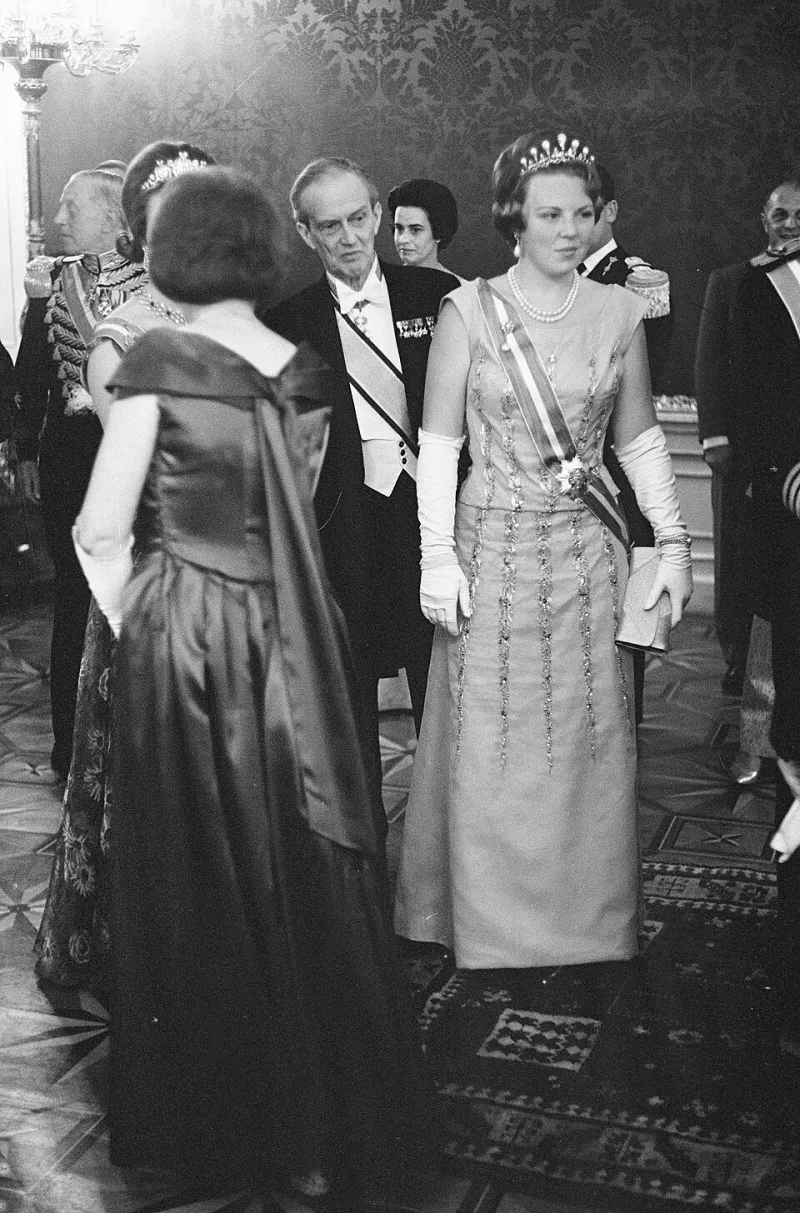
Photo: Harry Pot for Anefo, CC0, via Wikimedia Commons
There is a particular irony in the way the United States government stores its confiscated treasures. No velvet-lined safes worthy of the contents. No curators, no climate-controlled vitrines, no white gloves. Just evidence lockers and asset registries — and, occasionally, a parcel so heavy with old-world provenance that the clerk logging it must pause to read the manifest twice.
The jewels of America's self-made aristocracy have led stranger lives than the families that wore them. Fortunes built on railroads and steel were translated, in the closing decades of the nineteenth century, into Brazilian paraíbas and Golconda diamonds. And when those fortunes collapsed — through litigation, tax judgment, or outright fraud — the jewels did not simply pass to the next generation. Sometimes they passed to the government.
When the Marshal Comes for the Pearls
The legal mechanism is unglamorous: asset forfeiture, estate liens, court-ordered liquidation. But the objects it sweeps up are anything but. Court records from the early twentieth century describe federal marshals inventorying jewel cases in Fifth Avenue mansions, listing items with the flat precision of customs forms — "one diamond tiara, convertible to necklace; one strand matched pearls, ninety-eight count."
Many of these pieces were never resold. They were photographed, appraised, and then effectively forgotten, transferred between agencies as jurisdictions shifted. Estate attorneys who have worked on high-value forfeitures describe a familiar pattern: a gemstone of museum quality, documented in a 1911 court docket, absent from every subsequent record. Did it surface at a discreet sale? Was it quietly retained? The paper trail ends, and the mystery begins.
The Auction Room as Confessional
When seized jewels do reappear, it is usually at auction, wearing sanitized descriptions. "Property of a private collector," the catalog murmurs. But provenance researchers have become adept at matching a cushion-cut sapphire to a grainy 1902 society photograph. When the match lands, prices behave accordingly.
The buyers, dealers say, are rarely the curious. They are established collectors — often from families with their own complicated histories — who understand that a stone with a documented American dynastic past carries a narrative no certificate can replicate. A diamond that once sat in a Newport jewelry case during a summer of carriage drives is not merely a diamond. It is a plot twist.
What the Vault Says About Us
Europe handled its aristocracies by preserving them — palaces became museums, crowns became national patrimony. America, allergic to titles, chose a different route: when its own noble houses fell, their treasures were treated not as heritage but as assets. The consequence is a strange national condition in which the physical evidence of American grandeur is scattered, anonymized, and privately held, its story severed from the public record.
Perhaps that is fitting. A republic uneasy with aristocracy will not build shrines to it. But walking through any major museum's jewelry gallery, one senses the absence — the tiaras that should be there, hanging somewhere in a federal inventory instead, patient as only gold and stone can be. America's crowned heads lost their jewels the honest way: through the courts. The gems, meanwhile, are still waiting for someone to say their names.