Rooms Built to Hold a Single Note: Inside America's Private Symphony Boom
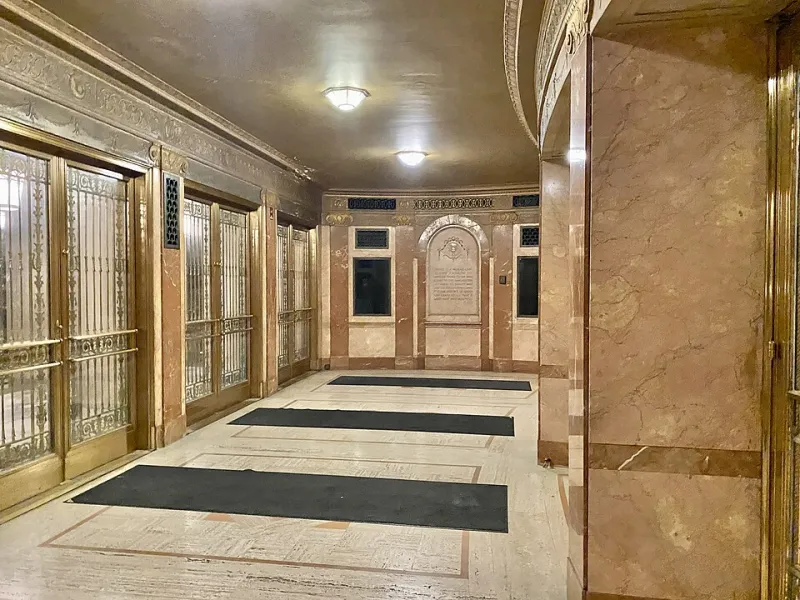
Photo: w_lemay, CC BY-SA 2.0, via Wikimedia Commons
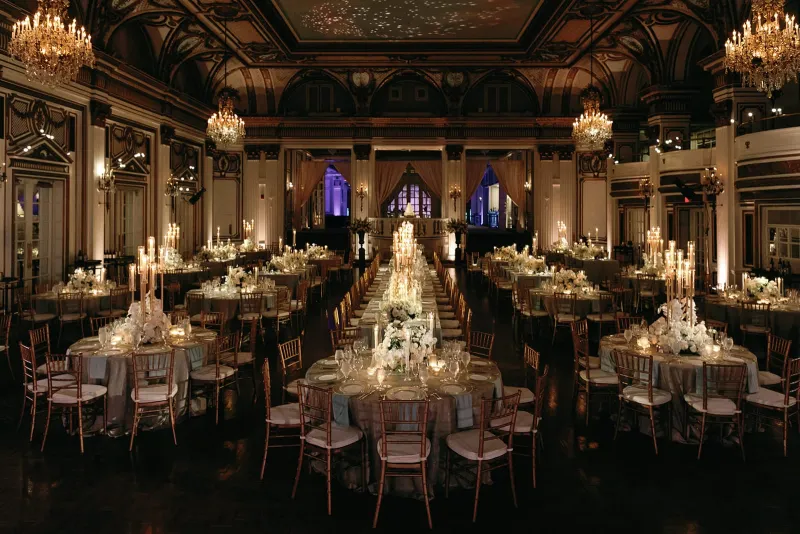
There is a moment, roughly forty minutes into any dinner party hosted in the great houses of American new money, when the doors to the foyer open and something improbable happens: an orchestra begins to play.
Not a recording. Not a sound system concealed behind imported millwork, though those are certainly present in these circles. An actual orchestra — hired, rehearsed, and tuned to the specific dimensions of a single room — performing for an audience that may number two dozen guests and one very proud homeowner.
For decades, the ultimate flex in American wealth was visual. A Rothko in the library. A vintage Aston Martin under glass in the garage. But the tastemakers of this era, from the tech corridors of the Pacific Northwest to the inherited estates of New England, have begun spending their fortunes on something that cannot be photographed, insured like a painting, or passed down to the grandchildren intact. They are buying music made for their rooms, and only their rooms.
The Vanishing Commission
"A jewel can be stolen. A painting can be sold. A performance can only be witnessed," explains one estate architect in Hudson Valley, who asked to be identified only by her firm. "My clients have started to understand that the rarest object in the world is a sound that exists once."
She is describing a quiet but accelerating market: residential commissions in which composers are engaged to write pieces calibrated to a specific foyer's reverberation time, or in which luthiers craft instruments whose tonal character suits a particular staircase's limestone. The piece may be performed a handful of times, or exactly once, and never again. Some homeowners contractually prohibit recordings.
It is patronage in the old European sense — the Medici model — but with a distinctly American twist: the patron is rarely a dynasty. More often, he or she is a founder, a decade or two past an exit, confronting the peculiar problem of what to do with a fortune and a house that already contains everything.
Engineering Silence Into Architecture
The logistics are anything but sentimental. Acousticians — a profession once confined to concert halls and recording studios — now make house calls to the country's most exclusive zip codes.
"We are asked to design rooms the way violin makers design instruments," one acoustical consultant told Majesticæ. "The ceiling height, the parquet, the marble — marble is a nightmare, incidentally, it throws sound around like a mirror throws light — all of it becomes part of the instrument. The house itself sings."
The most ambitious projects involve hand-carved pipe organs, built to order in workshops where the waiting list now stretches years. One such instrument, commissioned for a private residence outside Santa Fe, required reinforcing the floor joists before its first note could sound — a small structural inconvenience the owner reportedly described as "the best invoice I've ever paid."
In-house concert series have followed. A string quartet in residence for a single season. An annual winter performance for which the guest list is smaller than most wedding parties. These are the new debutante balls of the ultra-wealthy: invitations that confer admission not merely to a home, but to a moment that will never be repeated.
Why Now
The timing is no accident. A generation raised on digital abundance has developed a hunger for the unrepeatable. Anything digitized is, by definition, infinite — and therefore, in the calculus of this class, worthless as a marker of distinction. A live performance in a private room is the last luxury that resists the screenshot.
There is also, practitioners admit, a romantic streak running beneath the economics. Several clients speak of wanting their children to remember the house not as a warehouse of objects but as a place where extraordinary things happened. Memory, it turns out, is the only vault that cannot be audited.
Whether this constitutes patronage or peacocking is a question the industry has learned not to answer. What is certain is that in the grand houses of America, the new status symbol plays for only a few minutes, costs more than most cars, and disappears the instant it is enjoyed — which, its owners will tell you, is precisely the point.