The Provenance Problem: When a Diamond No Longer Needs a Billion Years
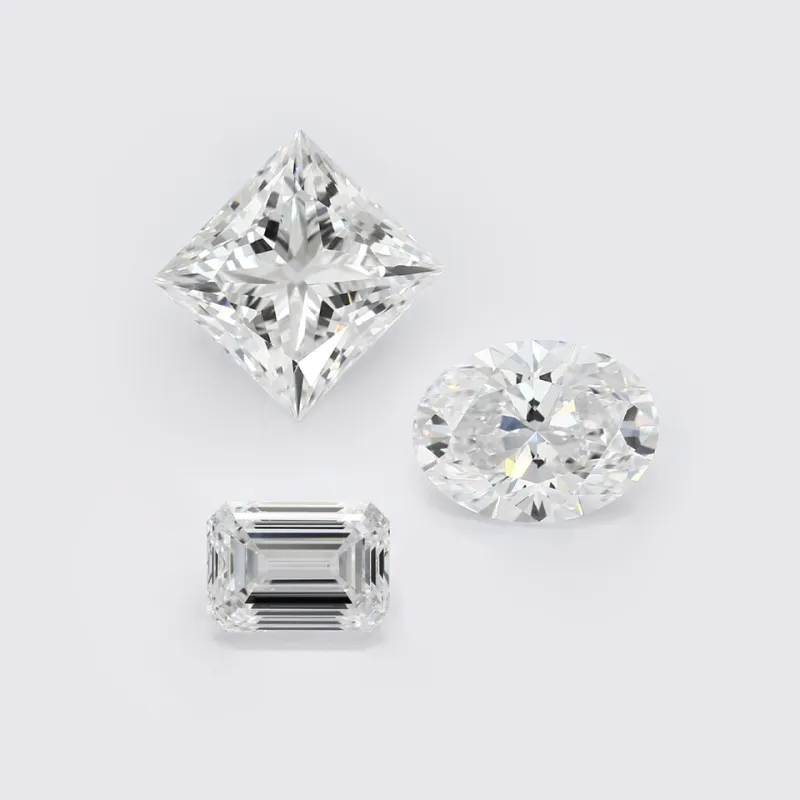
Photo: BrittanyRL, CC BY-SA 4.0, via Wikimedia Commons
There is a particular silence that falls over a Manhattan appraisal office when a client learns their grandmother's solitaire has lost its claim to scarcity. Not its beauty — beauty survives. Its scarcity. For a century, the value of a diamond rested on a single, unspoken premise: the earth made very few of them, and it took an eternity to do so. That premise has quietly expired.
The Vault Meets the Vapor Chamber
Walk through the trade floor of any major American jewelry show today and you will pass two parallel economies. In one, estate dealers display old mine-cut stones with handwritten provenance cards, their prices climbing year after year. In the other, young brands with minimalist storefronts in Austin, Brooklyn, and Los Angeles sell lab-grown stones grown in plasma reactors at a fraction of the cost — chemically identical, optically indistinguishable, and multiplying weekly.
The tension between these two worlds is no longer a trade dispute. It has entered the family.
"I had a client in her mid-twenties come in with her mother," says a third-generation jeweler based in Philadelphia's Jewelers' Row, who asked to remain anonymous to protect client relationships. "The mother wanted the daughter to wear the family stone. The daughter wanted a lab-grown three-carat, and she wanted to spend the difference on the setting — on design. That conversation is happening in every showroom in America right now."
What the Appraisers Are Saying
Estate appraisers occupy an uncomfortable middle ground. Replacement-value insurance quotes for lab-grown stones have fallen dramatically as production scales, while natural stones of comparable quality continue to appreciate in the estate market. The result is a widening gulf between what a stone looks like and what it is worth.
"Sentiment is not a line item," one New York-based appraiser told us. "A lab-grown stone in a family setting carries the same emotional weight as a natural one. But when it comes time to divide an estate, the paperwork tells a different story. Families are surprised. Some are hurt."
This has not stopped the shift. Industry analysts estimate that lab-grown stones now account for roughly half of new engagement ring sales in the United States, with adoption steepest among buyers under thirty-five. For a generation that came of age through two recessions, a climate crisis, and a healthy suspicion of inherited institutions, the argument is less about price than principle: why should luxury require excavation?
Rarity, Recalibrated
The purist counterargument rests on a word that has anchored the trade since the days of De Beers: provenance. A natural diamond carries a geological biography — pressure, time, chance. It cannot be ordered. It can only be found. Collectors of antique jewelry, particularly those who haunt the estate sales of Newport and the auction rooms of Manhattan, describe the difference in almost spiritual terms.
"You are not buying carbon," one estate dealer told us. "You are buying the fact that no one else has this one."
But the new buyers have their own answer to that. If no two lab-grown stones are identical either — each grown under slightly different conditions, each cut by hand — then rarity, they argue, was always partly a story. And stories can be rewritten.
The Future of the Family Vault
What does this mean for the heirlooms already locked away in American safety-deposit boxes? Probably not obsolescence. The estate market for natural stones has, if anything, strengthened, driven by the very scarcity the new supply exposes. A natural diamond is becoming what a first-edition book became after printing: not more common, but more collectible.
The likelier future is a two-tiered luxury. The lab-grown stone as the democratic jewel — brilliant, ethical, attainable, worn daily and worn proudly. The natural stone as the dynastic object, hoarded, inherited, and argued over by lawyers.
The crown, it turns out, is not losing its jewel. It is simply learning to share it.