The Painted Peerage: Inside America’s New Court Portrait Ateliers
In a converted carriage house north of New York City, a sitter in a midnight-blue dinner jacket holds a pose that would not be out of place in a minor European palace. A borzoi rests at his feet. Behind him, a fluted column rises toward a sky of stormy canvas. The painter, in paint-flecked linen, steps back and studies the composition. This is not a museum tableau. It is a private commission, and it is one of hundreds now moving through American studios in what dealers and painters quietly describe as a court-portrait boom.
The appeal is not difficult to parse. America has produced fortunes at remarkable speed, but it has not produced a hereditary aristocracy to frame them. For a certain kind of collector, a formal portrait offers something a contemporary photograph cannot: the impression of duration. It says that the sitter belongs not merely to the present moment but to a line—real, invented, or gently implied. The result is a genre that borrows freely from the visual grammar of European courts while remaining unmistakably American in its ambition.
A Commission That Begins With a Missing Ancestor
Most commissions begin with a conversation about lineage, though not always a literal one. Painters report that clients arrive with mood boards rather than genealogies: a Velázquez infant, a Winterhalter countess, a Sargent matron, a Bronzino nobleman with a cool, unreadable gaze. They ask for crimson drapery, marble busts, hunting dogs, gilded frames, and the suggestion of an order or sash. Some bring family crests designed by genealogists. Others bring no crest at all and ask the painter to invent a discreet one.
The studios serving this market are varied. There are traditional oil painters with waiting lists, portrait ateliers in Charleston and Santa Fe that specialize in historical technique, and larger firms that combine painting, digital maquettes, and elaborate prop departments. Prices typically begin around $35,000 for a modest half-length and climb past $250,000 for full-length compositions with multiple figures, animals, and architectural settings. Delivery can take six to eighteen months.
The painters are careful to describe their work as portraiture rather than genealogy. “We are not certifying ancestry,” one New York portraitist said. “We are composing a picture.” Still, the distinction can blur when a client requests a specific order, a particular coronet, or a hound that has never belonged to the family. The best studios ask what the symbols mean to the sitter. The less scrupulous simply paint what is asked.
The Sitting as Choreography
The sitting itself has become a ritual of its own. A typical commission may involve three to five sessions, each lasting two or three hours. Before the first sitting, the studio conducts what one painter calls a “narrative interview”: where the portrait will hang, what the sitter wishes to project, which heirlooms or jewels matter, and whether children or animals will be included. Wardrobe fittings follow. So do prop selections, from velvet curtains to antique chairs to the correct species of hound.
On the day of the sitting, the atmosphere is deliberately ceremonial. Phones are put away. Music is low. The sitter is coached on posture, hand placement, and the angle of the chin. Some studios serve tea; others prefer silence. The painter works from life, but also from photographs and digital studies, especially when the final canvas is large or the sitter is impatient. The result is a hybrid process—old-master discipline supported by contemporary logistics.
For the sitter, the experience can be unexpectedly emotional. A portrait is a negotiation with how one wishes to be seen, and the court style raises the stakes. The sitter is not merely being flattered; he or she is being placed in a visual tradition that once belonged to monarchs, cardinals, and hereditary nobles. In a country with no monarchy, that borrowed authority can feel both thrilling and uneasy.
Sashes Without a State
The unease is real. America has no official orders of nobility, no court protocol, and no hereditary titles. When an American collector commissions a portrait with a sash, a star, and a column, the result is not a record of rank but a performance of it. Critics call this aristocratic cosplay. Defenders call it historical homage. The painters themselves tend to draw a firmer line: they will use the grammar of court portraiture, but they resist painting false claims.
Some clients choose fictional orders designed with a heraldic artist. Others use actual foreign decorations they have legitimately received. A few request symbols that suggest lineage without asserting it: a house color, a Latin motto, a family seat that may be no more than a recently purchased country house. The most thoughtful studios build a visual fiction that is internally coherent, then leave the question of ancestry deliberately unanswered.
This is where the genre becomes distinctly American. It is not trying to restore an old order; it is trying to manufacture permanence on demand. The portrait becomes a kind of instant heirloom, a canvas that says the family has always been here, even when everyone in the room knows the fortune was made in the last two decades.
A New Ancestral Wall
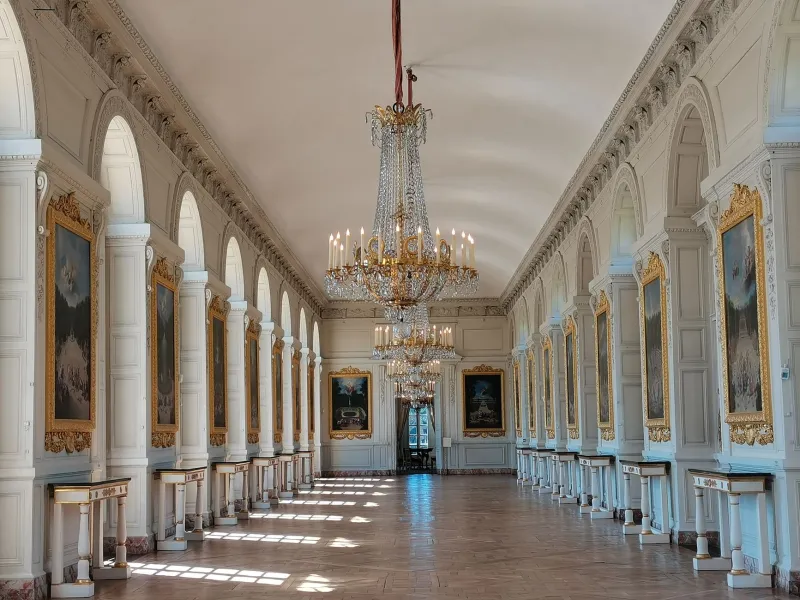
The portraits are rarely isolated. Collectors commission matching formats for spouses, children, and sometimes grandparents. The goal is a wall—a sequence of canvases that reads as a dynasty, even if the earliest sitter was painted last year. Designers report growing demand for stair halls, dining rooms, and private club corridors that can accommodate full-length portraits, along with the lighting, framing, and conservation such works require.
Fine jewelry often plays a supporting role. A commissioned portrait may include a family necklace, a signet ring, or a watch treated as a modern heirloom. The painter must render not only the object but its meaning: the jewel as inheritance, the watch as self-made achievement, the hound as companionship rather than estate. In this sense, the court portrait is less about pretending to be European than about assembling a personal iconography from whatever materials—ancestral or newly acquired—are close at hand.
The Line Between Homage and Costume
By late 2026, the boom shows no sign of receding. Painters who once survived on corporate portraits and campus commissions now field inquiries from technology founders, financiers, physicians, and families with no public profile at all. Some clients want the full theatrical treatment; others ask for modern dress with only a whisper of court syntax—a column here, a scarlet drape there, a hound at the edge of the frame.
The tension between homage and costume will not be resolved by the market. It is built into the genre. Portraiture has always been theatrical; every formal portrait is a composition of choices about what to reveal and what to invent. The American court portrait simply makes those choices more visible. It asks whether a country without a monarchy can still create the symbols of permanence—and whether a canvas can supply what a family tree cannot. The answer, for now, is hanging in a growing number of American hallways, waiting for the next generation to walk past.