Seven Palaces of the New World: Walking Through America's Gilded Dreams
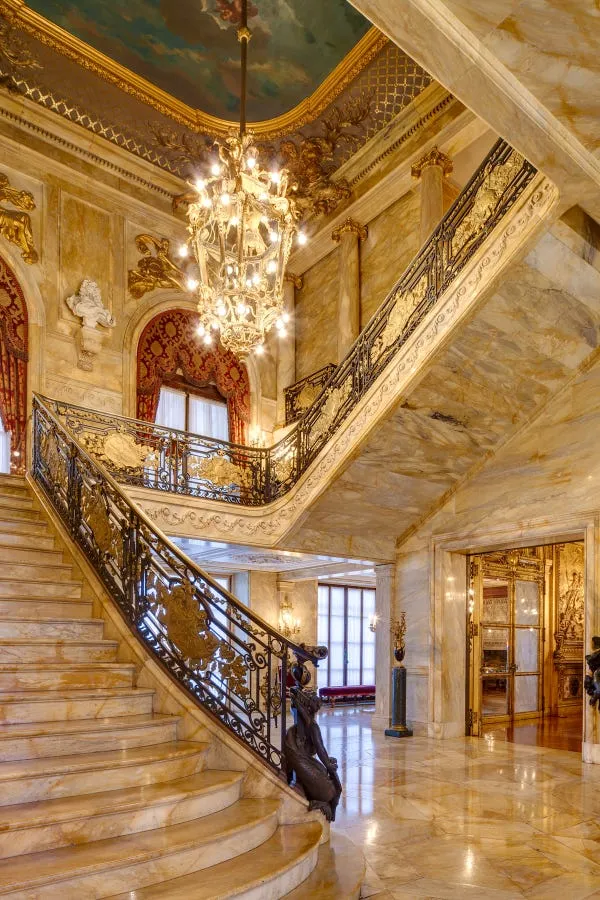
Photo: grand Gilded Age mansion interior with marble staircase and chandeliers, via i.insider.com
The United States rejected titles of nobility in its founding documents, then spent the next century building residences that would make European dukes feel underdressed. The great American estates — products of railroad money, banking fortunes, and an unshakeable belief that bigger was better — survive today as some of the most extraordinary travel experiences on the continent. Pack your walking shoes and your sense of wonder. Here are seven where the past still holds court.
1. The Breakers — Newport, Rhode Island
The crown of Newport's mansion row, this seventy-room summer "cottage" was commissioned by Cornelius Vanderbilt II and completed in 1895 at a cost of roughly $12 million — over $400 million in today's terms. The Great Hall rises to a ceiling painted to evoke an open sky; the dining room features twelve carved alabaster columns. Visitors can tour the grounds year-round, and the preservation society's behind-the-scenes tours reveal servant corridors and engine rooms that made Gilded Age magic run.
2. Biltmore Estate — Asheville, North Carolina
George Washington Vanderbilt II's 175,000-square-foot château remains the largest private home ever built in America, set on 8,000 acres of Blue Ridge Mountain splendor. Designed with input from landscape architect Frederick Law Olmsted, it is still owned by Vanderbilt descendants. Book an overnight stay at the on-site inn or village hotel, and time your visit for the candlelight Christmas tours, when dozens of trees and miles of garland transform the banquet hall into something out of a storybook.
3. Hearst Castle — San Simeon, California
Publishing magnate William Randolph Hearst turned a ranch camp into a 165-room hilltop fantasy of Spanish Revival excess, complete with Roman-style pools, a private zoo's remnants, and a dining room modeled on a European cathedral. Guests at his legendary parties included Hollywood's entire golden-era A-list. Today's state-run tours range from the grand rooms to the secretive upstairs suites — and the Neptune Pool, finally restored after years of renovation, is worth the winding drive up the coast alone.
4. The Elms — Newport, Rhode Island
Often overshadowed by its Vanderbilt neighbors, The Elms is arguably Newport's most perfectly proportioned mansion, modeled on a French château and framed by formal sunken gardens and copper beech trees. Its basement-to-attic servant-life tour is widely considered one of the most illuminating social-history experiences in American preservation.
5. Vizcaya Museum and Gardens — Miami, Florida
Chicago industrialist James Deering's winter residence is an Italianate mirage on Biscayne Bay — coral stone, salvaged European furnishings, and gardens that blend Italian formality with tropical exuberance. It remains one of the few places where a Miami morning can feel indistinguishable from a Venetian reverie.
6. Filoli — Woodside, California
South of San Francisco, Filoli is the West Coast's great surviving country estate, a Georgian Revival manor wrapped in sixteen acres of immaculate gardens — the famous double rows of espaliered fruit trees and the yew alleys are horticultural theater at its finest. Seasonal events, from spring blooms to holiday evenings, reward repeat visits.
7. Lyndhurst — Tarrytown, New York
Perched above the Hudson River, this Gothic Revival castle in the style of an English great house passed through the hands of merchant princes and railroad barons before its final owner, Helen Gould, filled it with Tiffany glass and fine art. Its gallery wing and soaring central court feel genuinely medieval — a rare American illusion sustained for nearly two centuries.
Living Like the Gilded Age
A handful of these properties go beyond daytime admission. Biltmore's inn, Newport's boutique hotel scene within steps of the mansions, and seasonal gala evenings at several estates offer travelers the closest available approximation of aristocratic American life. The dresses are no longer required, but the grandeur, mercifully, remains exactly as built.