The Binder and the Bloodline: How American Dynasties Are Codifying the Art of the House
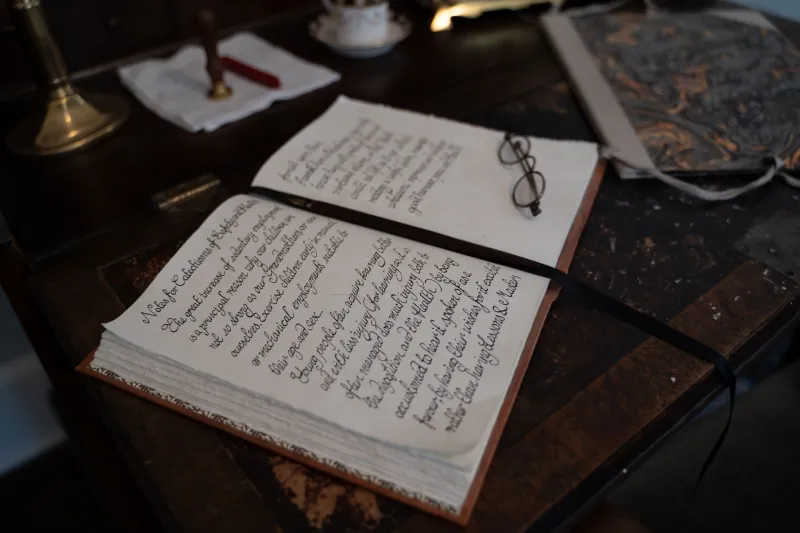
In a country that has never been entirely comfortable with aristocracy, the American pursuit of dynasty has always required a certain discretion. The newest expression of that ambition is not a crest, a portrait, or a ballroom, but a binder: a private household manual, often bound in leather and kept from public view, that sets down in precise language how a family’s home should be run. These documents are commissioned by the very wealthy, drafted with the help of etiquette consultants and estate managers, and revised as families grow, marry, divorce, and move between residences. In 2026, they have become one of the quietest markers of serious money in America.
From Instinct to Instruction
The traditional American household relied on memory and oral instruction. A housekeeper trained a successor; a butler learned the family’s rhythms by observation; a hostess carried seating plans in her head. That model still works in smaller homes, but it falters when a family accumulates multiple residences, a rotating staff, and an expanding calendar of philanthropic and social obligations. The household manual emerges from that friction. It is part operations manual, part etiquette book, and part family charter.
Consultants who draft these volumes describe a deliberate borrowing from European court practice. The vocabulary of precedence, the order of service at dinner, the care of silver and linen, the protocols for receiving guests—all have antecedents in royal and aristocratic households. But the American version is rarely a simple import. It is adapted to smaller staffs, informal family cultures, and the legal realities of American employment. A manual for a Napa Valley estate may devote pages to vineyard hospitality and outdoor service; one for a Palm Beach house may address seasonal staffing and hurricane preparedness alongside crystal inventories. The point is not to imitate a palace but to make the family’s own rituals repeatable.
The Architecture of a Household
The most sophisticated manuals begin with an organizational chart. Titles are defined—estate manager, house manager, executive housekeeper, chef, sous-chef, butler, valet, chauffeur, grounds staff—along with reporting lines, confidentiality obligations, and the boundaries between household and family business. In American homes, where staff may be few and duties overlapping, the chart is often accompanied by a matrix of responsibilities: who polishes the silver, who inventories the wine, who liaises with florists and caterers, who handles the family’s private travel.
Care of objects receives particular attention. Silver is not merely cleaned but rotated and recorded; hallmarks are noted; storage conditions are specified. Linens are assigned to rooms and occasions; crystal is counted before and after events. The manual may include instructions for packing a household for seasonal migration, for closing a residence, for receiving deliveries, and for managing vendors who arrive with their own crews. The tone is practical rather than precious, but the underlying message is ceremonial: the family’s possessions are not just expensive; they are part of a continuing order.
The Choreography of the Evening
Entertaining is where the manual becomes most theatrical. A grand evening is a sequence of small decisions: when the first guest may arrive, how coats are received, how introductions are made, when dinner is announced, how place cards are arranged, how wine is poured, how courses are cleared, how the host and hostess move guests from one room to the next. The manual codifies those decisions so that a dinner for forty can unfold with the same assurance as a dinner for eight.
Table precedence remains a delicate subject. American families often prefer to appear relaxed, but behind the appearance lies a plan. The manual may set out principles rather than rigid formulas: the host and hostess anchor the table; guests of honor are placed accordingly; spouses and partners may be separated or seated together depending on the family’s preference; blended families and divorced parents require careful mapping. Consultants describe writing alternative seating plans for the same evening, each one adjusted for last-minute changes. The goal is not to display hierarchy for its own sake but to prevent the small uncertainties that can make a formal evening feel unsettled.
A Code for the Self-Made
The appeal of the household manual is closely tied to the American experience of wealth. Families that have made their fortunes within a generation cannot inherit a complete set of domestic conventions; they must assemble one. The manual allows them to choose which traditions to adopt, which to adapt, and which to leave behind. It can encode family lore alongside service standards, philanthropic priorities alongside wine inventories. In that sense, it is a document of self-invention as much as discipline.
Consultants in this field work discreetly, often under non-disclosure agreements, and are careful not to present themselves as arbiters of taste. They interview family members, observe existing routines, and draft a document that is meant to be lived with rather than displayed. Some manuals are bound in small quantities for family members and senior staff; others exist as secure digital files with controlled access. The most thoughtful versions include a process for revision, acknowledging that a household is not a museum exhibit but a working institution.
The Limits of the Code
Not every family needs a manual, and not every manual succeeds. A code that is too rigid can make a home feel like a stage set; a code that ignores the dignity and professionalism of staff can breed resentment. The best examples are written with an eye to labor law, fair treatment, and the realities of modern household employment. They are also careful about the difference between ceremony and affectation. In a country without an inherited nobility, the household manual cannot confer status by itself. It can only make a family’s chosen way of living more coherent.
Still, the trend is telling. As American fortunes mature, the household manual has become a way to hold a family’s world together across residences, generations, and staff changes. It is a private constitution for the home—less about crowns than about continuity, less about grandeur than about the quiet confidence of knowing exactly how an evening should unfold.