Pressed in Copper, Sealed in Legacy: The American Ateliers Still Cutting Invitations by Hand
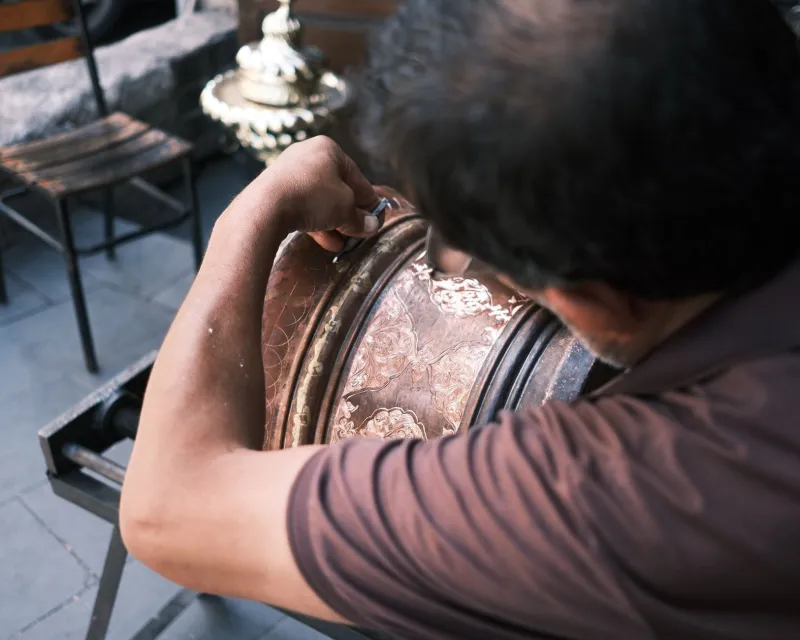
The first thing one notices inside a hand-engraving atelier is not the machinery but the silence. There is the soft tick of a steel stylus meeting a copper plate, the whisper of a proof being lifted from damp paper, the low murmur of a master engraver explaining why a serif is half a hair too wide. In an era when a wedding website can be launched in an afternoon, these rooms operate on a different clock—one measured in weeks, not minutes, and in generations rather than seasons.
The Return of the Heavy Envelope
Across the United States, a small but determined coterie of stationers is experiencing a revival that would have seemed improbable a decade ago. Their clients are not simply ordering paper; they are commissioning artifacts. A formal invitation engraved on thick cotton stock, accompanied by a hand-lined envelope and a crest struck from a bespoke die, can cost anywhere from several hundred dollars to well over five thousand. The timeline is equally deliberate: four to eight weeks is standard, and the most elaborate suites—those involving custom crests, hand-painted borders, or tissue-lined boxes—can stretch longer.
The appeal is partly tactile. Engraving, unlike digital printing or even letterpress, leaves a raised surface that can be felt with a fingertip. The ink sits above the paper, a physical signature that cannot be replicated by a screen. For families who already own the paintings, the houses, and the jewels, the invitation has become the final, portable proof of permanence—a piece of heritage small enough to be tucked into a pocket but weighty enough to announce a marriage, a debut, or a milestone with the gravity of a state document.
Where the Plates Are Still Cut
America’s hand-engraving tradition never vanished, but it contracted into a handful of specialist firms, many of them family-run and concentrated along the Eastern Seaboard. In New York, ateliers that once supplied the city’s Gilded Age ballrooms now work with a new generation of families whose names may be younger but whose ambitions are no less grand. In Philadelphia, the smell of engraver’s ink still lingers in workshops that have operated for more than a century. Charleston and Savannah preserve a Southern variant—lighter papers, more floral motifs, a preference for copperplate script that evokes the eighteenth century without imitating it.
On the West Coast, the trade is younger but no less serious. Studios in San Francisco and Los Angeles have built clienteles among technology founders and entertainment figures who want the patina of old-world ceremony without the stuffiness. The result is a hybrid aesthetic: traditional engraving techniques applied to modern crests, unconventional color palettes, and papers sourced from European mills but cut and finished in the United States.
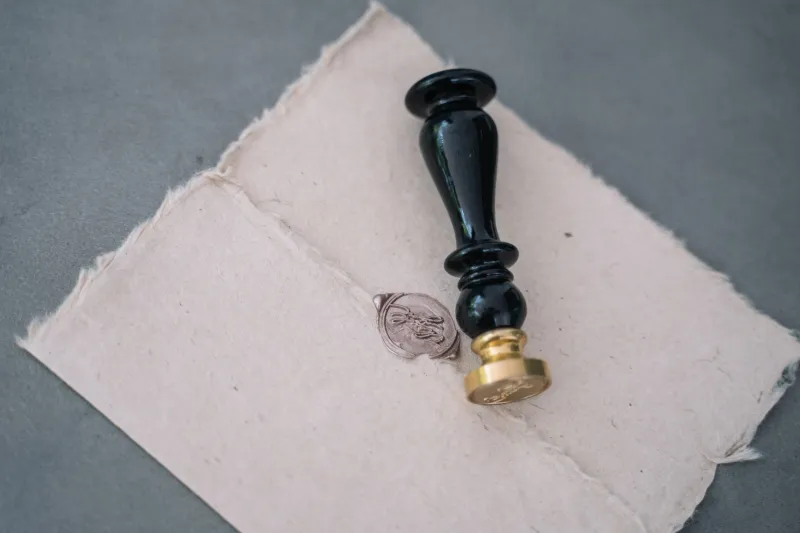
What unites these ateliers is a shared reverence for the die. Each custom crest or monogram begins as a drawing, then is transferred to a steel plate and cut by hand—a process that can take days for a single intricate design. The plate is then hardened and used to strike the copper printing plate, which is inked and pressed against dampened paper. The pressure forces the ink into the fibers, creating the characteristic raised relief. It is a chain of craftsmanship that involves no shortcuts and very little automation.
The New Status Object
Why, in 2026, does a piece of paper matter so much? The answer lies in the nature of luxury itself. As digital communication has become ubiquitous, the physical object has acquired a new scarcity value. A text message disappears; an engraved invitation is kept. It is photographed, framed, archived in family papers. It becomes, in effect, an heirloom—a document that future generations may discover in a cedar chest and recognize as a marker of a particular moment.
There is also the matter of privacy. In a culture that documents everything, the hand-engraved invitation is deliberately discreet. It is sent by mail, not posted online. It carries no hashtag. Its circulation is controlled by the host, not by an algorithm. For families who value discretion as much as display, that combination is potent.
Stationers report that clients increasingly request suites that function as complete ceremonial experiences: the invitation itself, a hand-engraved reply card, a crest-embossed menu, a seating chart on heavy stock, and envelopes lined in silk or hand-marbled paper. Some commission matching calling cards for debutantes or personalized correspondence cards for matriarchs. The paper becomes a family signature, used across generations and occasions.
The Cost of Slowness
The economics of this trade are unforgiving. Hand engraving cannot be rushed, and the skill required is rare. Apprenticeships last years. Many ateliers have waiting lists that extend months. The price of a single custom die can exceed a thousand dollars before a single invitation is printed. Yet demand continues to grow, particularly among families who see the expense not as extravagance but as stewardship—an investment in objects that will outlast them.
That sensibility is distinctly American. This is a country that has always been ambivalent about inherited titles but fascinated by inherited objects. The engraved invitation threads that needle. It borrows the visual language of European royalty—crests, copperplate script, heavy stock—but it is commissioned by families who earned their fortunes rather than inheriting them. The result is a democratic aristocracy of paper, open to anyone willing to pay for the patience it requires.
A Future in Copper
As the year draws to a close, the ateliers are preparing for a busy season of weddings, galas, and private ceremonies. The plates are cut, the papers are ordered, the envelopes are being lined by hand. In a world that increasingly prizes speed, these craftspeople are betting on the opposite: that slowness, tactility, and a raised line of ink on cotton paper will continue to signify something that cannot be downloaded.
It is a quiet bet, but it is winning. The invitation, once a mere formality, has become a statement—a small, heavy rectangle of paper that says, without saying it aloud, that some things are still worth doing by hand.