The Invisible Impresarios: How America’s Grand-Entrance Artists Stage the Perfect Arrival
The Architecture of Anticipation
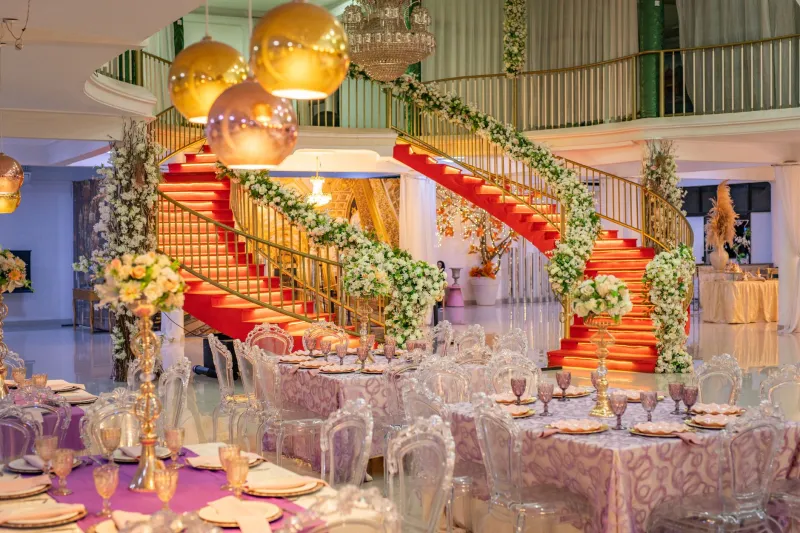
On a mild evening in Palm Beach, a charity ball is about to begin. Behind a velvet curtain at the top of a sweeping staircase, a host waits with the stillness of a performer before a cue. An earpiece murmurs a countdown. Below, a string quartet shifts from ambience to a commissioned fanfare—three bars of brass that no one in the room has heard before. The curtain parts. The host descends. The applause begins exactly on the downbeat.
This is not luck. It is the work of an entrance designer, one of a small and discreet cadre of American specialists who choreograph the moment a person becomes a presence. They are part event producer, part stage director, part social anthropologist. Their clients are philanthropists, collectors, tech founders, and heirs—people who have the means to buy a crown but prefer to rent the grammar of royalty for a single evening.
The profession has no trade association, no formal credential, and no public directory. Its practitioners are found through referrals, often after a gala that ran smoothly or a private dinner that felt, in the words of one host, “like walking into a portrait.” They work in New York, Los Angeles, Houston, Miami, and the older resort towns of the Northeast. They are paid to think about what most guests never notice: the angle of a follow spot, the acoustics of a marble foyer, the precise number of seconds a host should pause at the top of the stairs before descending.
A Fanfare Without a Throne
America has no hereditary aristocracy, but it has always had a appetite for court ritual. The difference is that American ceremony is contractual rather than inherited. A host does not enter because of bloodline; the host enters because an entrance has been designed, rehearsed, and paid for. This distinction matters to the designers, who describe their work as a form of temporary architecture—a structure of timing and light that exists for a few minutes and then dissolves.
A typical commission begins weeks before the event. The designer visits the venue, measures the distance from the green room to the top of the stairs, and studies the sightlines from every table. They ask about the host’s walk, their height, their comfort in heels or patent leather. They consult the composer of the fanfare, often a conservatory-trained arranger who specializes in short ceremonial pieces. They coordinate with the lighting director to create a cue that flatters without blinding. They write a minute-by-minute script that includes not only the entrance but also the host’s first stop, first handshake, and first glass of champagne.
“The goal is not to make an entrance look theatrical,” says one New York-based designer who asked not to be named. “It is to make it look inevitable. The guest should feel that the host simply arrived, not that a machine arranged it.”
The Democratic Court
The rise of the entrance designer tracks with a broader American interest in ceremony that borrows from European court life without adopting its exclusions. Debutante balls have returned in updated form. Private dining rooms are built with processional routes. Charity galas compete on the quality of their tableaux. In this environment, the entrance is the one moment when hierarchy is permitted to be visible—but only briefly, and only on terms the host controls.
Designers say their clients rarely ask for pomp. They ask for presence. A technology founder in Silicon Valley wanted to enter his own birthday party without a spotlight; the designer arranged for him to emerge from a crowd near the bar, as if he had been there all along. A hedge-fund manager in Greenwich requested a staircase descent timed to a live cellist, but insisted that the music begin only after he had reached the landing—so that the sound seemed to follow him rather than announce him. A museum trustee in Chicago commissioned a fanfare for a gala, then asked that it be played softly enough that guests at the rear of the tent would wonder if they had imagined it.
These are not the gestures of old money. They are the gestures of people who understand that in a republic, grandeur must be performed rather than assumed. The entrance artist supplies the performance.
The Anti-Entrance
By 2026, the most sophisticated clients are asking for something that would have seemed counterintuitive a decade ago: no entrance at all. The designer’s job becomes the orchestration of invisibility—the host appears from a side door, or rises from a table, or is simply found in conversation when the lights go up. The fanfare is replaced by a change in room temperature. The staircase is avoided entirely.
This is the paradox of contemporary luxury. A visible entrance is a claim on attention; an invisible one is a claim on confidence. The host who does not need to be announced is the host who has already won. Designers describe the anti-entrance as the hardest work they do. It requires the same precision—the timing, the lighting, the acoustic planning—but its success is measured by the absence of a moment. Guests remember only that the evening felt effortless.
For the entrance artists themselves, the reward is professional rather than public. They are not named in the program. They do not take a bow. They stand at the back of the room, watching the host descend or not descend, and they check their watches. If the applause starts on the downbeat, they have done their job. If no one notices them at all, they have done it well.
The most luxurious arrival in America this year may be the one nobody sees coming. And the person who designed it has already slipped out through the service entrance.