Cloth, Crest, and Discretion: The Ateliers Dressing America's Private Households
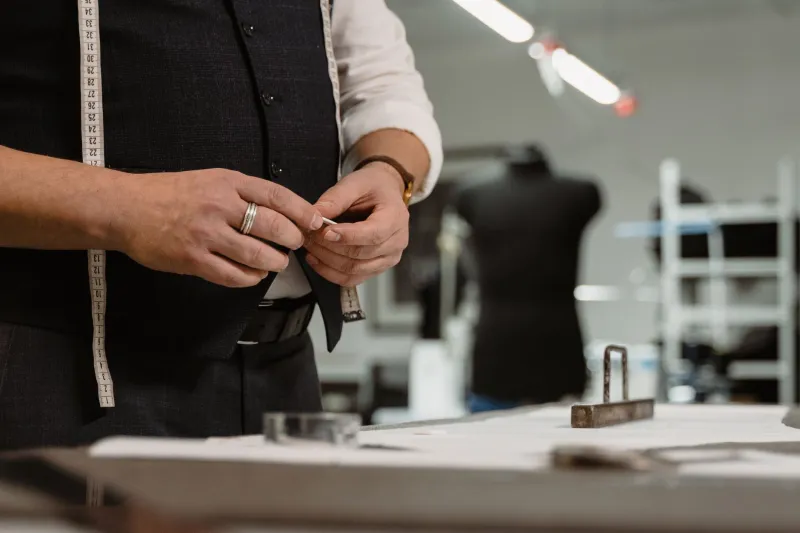
The fitting room sits on the second floor of a former carriage house in the Connecticut backcountry, and it is lined floor to ceiling with bolts of cloth that will never be sold to a customer. A house manager stands on a low platform while a cutter pins the shoulder of a coat destined, in a sense, for the dining room below. No one will compliment the garment. That is the point.
For most of the last century, the American private uniform announced itself. Brass buttons, epaulets, striped waistcoats, a butler's tailcoat pressed to the seam — the vocabulary borrowed heavily from European service and from the stage. What is being made now, by a small and quietly expanding circle of ateliers from Rhode Island to the North Carolina Piedmont, is an entirely different proposition: livery designed to be read as architecture rather than costume.
The Retreat From Gold Braid
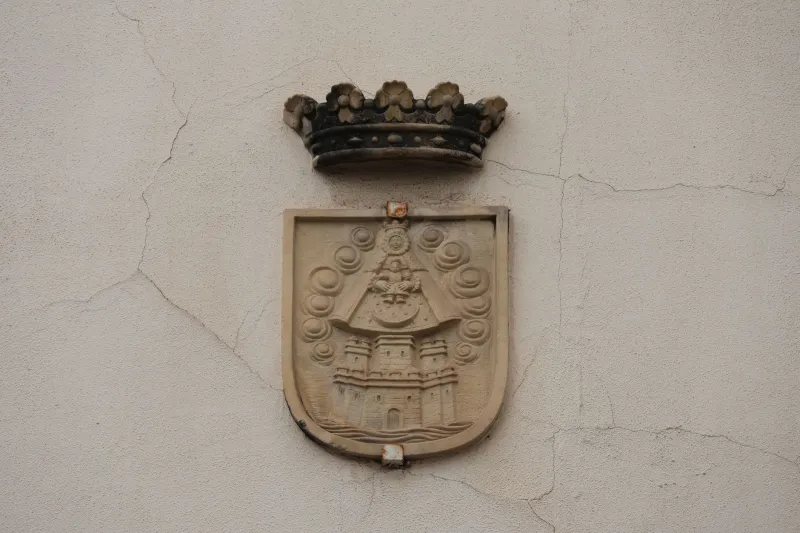
In 2026, the requests arriving at these workshops have less in common with period drama than with the tailoring floor of a serious menswear house. Clients want cloth that photographs flat and reads clearly at twenty paces: charcoal barathea, deep navy flannel, undyed linen for warmer houses, turned edges instead of contrast piping. Crests are embroidered tone-on-tone, or omitted from the chest entirely and relegated to a button, a pocket interior, a collar tab.
The reasoning is practical as much as aesthetic. A household that hires a dozen people and entertains twice a month does not want a staff that looks like a production. It wants staff that look inevitable. The same instinct that has moved American wealth away from marble foyers and toward lime plaster has moved livery away from spectacle. Privacy, in this market, is a design brief.
A Button With a Die Behind It
Much of the craft now concentrates on a surface no larger than a nickel. House buttons are struck from custom dies, in horn, corozo, or cast and hand-finished brass depending on the household, and the engraving is done at a scale that rewards closeness — a monogram, a small figure, a colophon of the family's choosing. One New England foundry that once supplied military insignia now runs a modest private-order line for estate clients, with dies archived against reorders that may arrive a decade later.
The fittings are equally unglamorous and equally precise. Cutters take measurements that anticipate a person who will spend eight hours standing, carrying, opening doors, and reaching across a table. Sleeve heads are set shallow so the arm lifts cleanly. Waistbands are built to sit without readjustment. A uniform that requires adjusting is a uniform that draws the eye, which defeats its purpose.
The House Tartan and the Very Small Loom
A smaller but growing category is the proprietary weave: a sett designed for a family, a foundation, or an estate and registered with no one. American mills in Pennsylvania and the Carolinas will run short warps for private clients at what the trade politely calls an ambitious minimum, and the resulting cloth typically appears in a single place — a groundskeeper's waistcoat, a gift of scarves at a holiday gathering, the lining of a Christmas coat.
Apres are commissioned in the same spirit. Embroidered linen aprons for the kitchen and the flower room, canvas and leather work gloves for the gardens and the stables, driving gloves with a perforated palm and a single line of stitching. These are the pieces most likely to be given as gifts rather than issued as kit, and they carry a disproportionate share of a household's identity for the simple reason that guests are far more likely to see a gardener's gloves than a butler's tailcoat.
Salt Air, Jet Fuel, and the Working Wardrobe
Waterborne and airborne households have become reliable patrons. Yacht crews need livery that survives salt, sun, and a fourteen-hour turnaround in a foreign port, and the ateliers have responded with technical cloth cut in traditional shapes: quick-drying wool blends, removable linings, epaulets that are stitched rather than buttoned so nothing catches on rigging. Aviation crews, smaller in number and more visible to their employers, tend toward a single well-cut blazer in a dark neutral, with the house mark confined to the buttons.
The same restraint governs private security and estate gatehouses, where a suit is now often specified in place of a blazer-and-tie, and where the client will pay a premium for garments that suggest a doorman at a great hotel rather than anything more martial.
The Archive Below Stairs
What distinguishes the current generation of ateliers from ordinary uniform suppliers is the paperwork. Each commission generates a pattern archive, a cloth specification sheet, a die record, and a sizing ledger maintained for a staff that will turn over entirely more than once. House managers change; families relocate; a head of household may order a replacement apron in 2034 for a person not yet hired. The atelier is expected to remember.
Discretion is written into the contracts. Some houses now specify that no client may be named in a portfolio, that photographs of finished garments be retouched to remove identifying settings, and that fabric be woven under a neutral name. The craft, in other words, has acquired the habits of a private bank.
What the Cloth Is For
The deepest function of livery has never been identification. It is continuity — the suggestion, offered without a word, that the household has always been staffed this way and will be staffed this way long after the present guests have gone home. Americans have historically been skeptical of that suggestion and simultaneously drawn to it, which is why the trade has always hovered between democratic plainness and dynastic ambition.
What is new in 2026 is the settlement between the two. The cloth is better than it has ever been; the ornament is quieter than it has ever been. A guest at a dinner in Palm Beach or a wedding in the Hudson Valley will not remember the buttons. He will remember, vaguely, that everyone who passed him seemed to belong to the same house. That impression is not an accident, and it is not inexpensive. It is a commission, cut to order, and archived against the day it is needed again.