The Airworthiness of Splendor: How American Ateliers Build Flying Estates Without Grounding the Fantasy
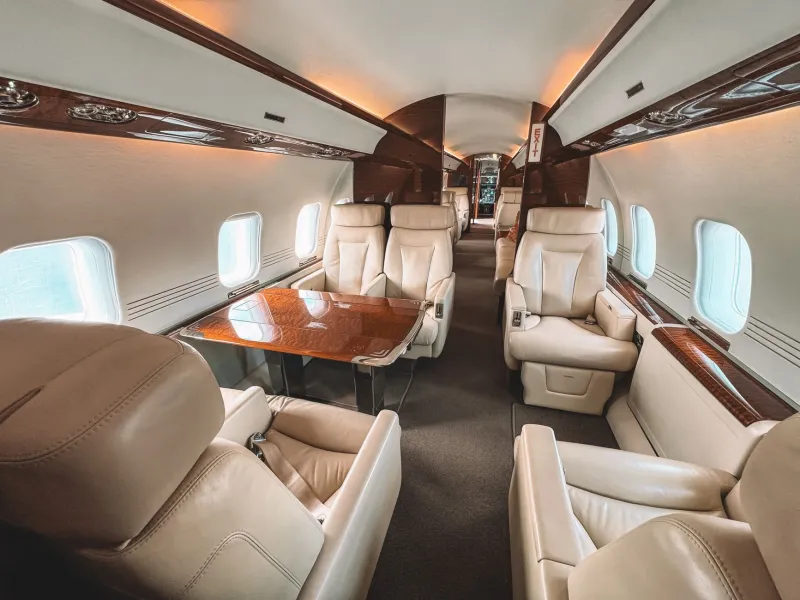
At a completion hangar in the American South, a wide-body cabin is entering its final months of fitting. The seats are not yet in place, but the crest is: a heraldic device worked in gilt thread, destined for a bulkhead that will separate a principal’s stateroom from a conference area. To an outsider, the scene resembles a court in exile. To the engineers, it is a sequence of weight, fire, and load calculations. Both descriptions are accurate.
Private aviation has always sold time. In 2026, a small American niche is selling something less practical and more potent: altitude as ancestry. The firms that outfit private aircraft with gilded thrones, silk-lined cabins, hand-carved altars, and heraldic motifs are not merely decorating interiors. They are building portable dynastic stages—rooms that can leave Teterboro or Van Nuys before dawn and arrive as a statement of lineage, taste, and command. The paradox is that every square inch of spectacle must answer to the least spectacular authorities in the room: weight, balance, flammability, and evacuation.
The Hangar as a Court
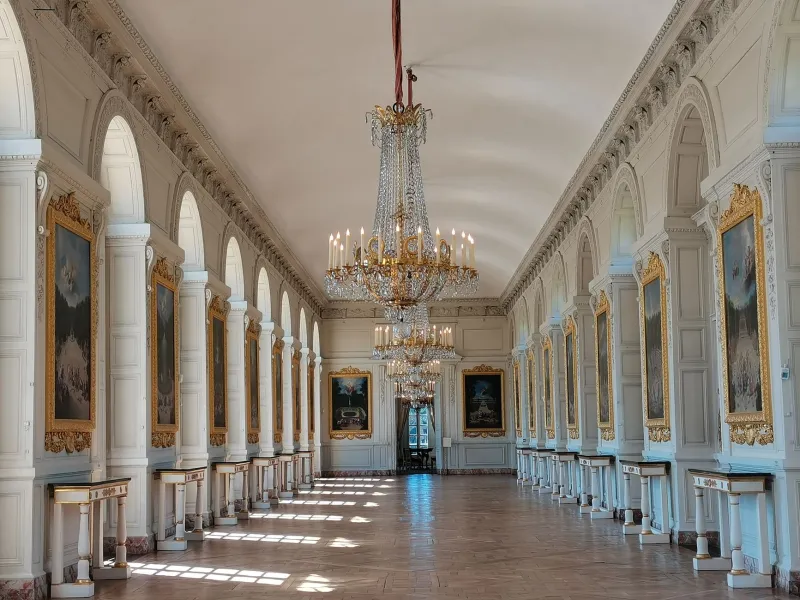
The American ateliers engaged in this work tend to be small, discreet, and fluent in two languages that rarely meet. One is the language of the court: walnut burl, velvet, bronze, needlepoint, family mottoes, and the deliberate symmetry of a room designed to be entered. The other is the language of certification: burn tests, load paths, wiring separation, and the paperwork that allows a cabin to fly.
The owners who commission such aircraft are not usually first-time buyers. They are families with houses in Palm Beach, Aspen, and Napa; foundations, art collections, and succession plans. For them, the aircraft is not a vehicle so much as a room that happens to move. It must receive guests, host negotiations, carry children and grandparents, and project continuity. A crest on a bulkhead does what a crest on a gate does, only faster and at 40,000 feet.
Designers describe the brief in almost theatrical terms. One client wants a throne-like seat for a family patriarch, but the seat must also be certified for takeoff and landing. Another wants a hand-carved altar for in-flight observance, but the altar must fold, lock, and pass the same flammability standards as the carpet. A third wants a silk-lined cabin in a specific shade of heirloom blue; the silk will likely be a treated blend, and the blue will be tested under cabin lighting before it is approved.
The Weight of Ceremony
Weight is the first constraint and the least negotiable. Every kilogram added to a cabin costs range, fuel, and payload. A gilded throne built like furniture would be an indulgence the aircraft cannot afford. The solution is often an illusion of mass: aluminum honeycomb cores, thin veneers, gold leaf over lightweight substrates, and carved details that are hollowed or resin-cast. What appears to be solid mahogany may be a composite shell with a wood face. What appears to be marble may be a veneer measured in millimeters.
Balance is the second constraint. A cabin is a careful distribution of mass along the length of the aircraft. Moving a heavy credenza aft can alter handling; concentrating too much weight in a stateroom can require counterbalancing elsewhere. Completion centers therefore treat the interior as part of the aircraft’s flight envelope, not as a separate decorative exercise. The most successful ateliers employ or consult structural engineers early, before a sketch becomes a promise.
Fire is the third constraint, and the one that most often interrupts fantasy. The FAA’s flammability requirements for transport-category aircraft apply to materials, finishes, and assemblies. Silk, wool, leather, foam, wood veneer, and adhesives must meet specified tests. A hand-carved altar may be beautiful, but it must also resist ignition and limit flame spread. Designers learn to specify treated textiles, fire-blocking layers, and assemblies that have been tested as a system rather than as a collection of handsome parts.
A Portable Dynasty
The cultural logic of the flying estate is distinctly American. It borrows from European courts, but it does not depend on them. An American owner can commission a coat of arms, a cabin crest, a family motto, and a stateroom without claiming an old title. The aircraft becomes the estate: a self-contained seat of family authority that can be moved to a meeting in New York, a wedding in Montana, or a board retreat in Florida. It is heritage as infrastructure.
This is why the interiors often emphasize ritual over utility. A conference table may double as a dining table; a credenza may conceal a portable altar; a stateroom may be designed for private calls but finished like a dressing room. The cabin is arranged for arrival—for the moment a guest steps aboard and understands whose world they have entered. The most effective designs do not shout. They establish a hierarchy through materials, sightlines, and the quiet assurance of a room that has been composed rather than furnished.
The Limits of Fantasy
The FAA does not object to beauty. It objects to uncertainty. Cabin modifications on transport-category aircraft typically require approved data, often through supplemental type certificates or other approved pathways, and the work is inspected against the same standards as any other airworthiness item. Emergency egress, oxygen systems, wiring, and seat certification all remain part of the design. A flying palace must still function as an aircraft.
For American ateliers, the compromise is the craft. The throne is not a throne; it is a certified seat with a ceremonial silhouette. The altar is not an altar; it is a secured cabinet that opens into a ritual surface. The silk is not pure silk; it is a treated textile that reads as silk under cabin light. The fantasy survives because the engineering is allowed to shape it early, not because the engineering is hidden at the end.
That is the quiet lesson of the flying estate in 2026. Splendor at altitude is not a rebellion against physics. It is a negotiation with physics, conducted in a hangar, documented in test reports, and finally revealed to the owner as a room that feels inevitable. The palace flies because no one mistook it for weightless.